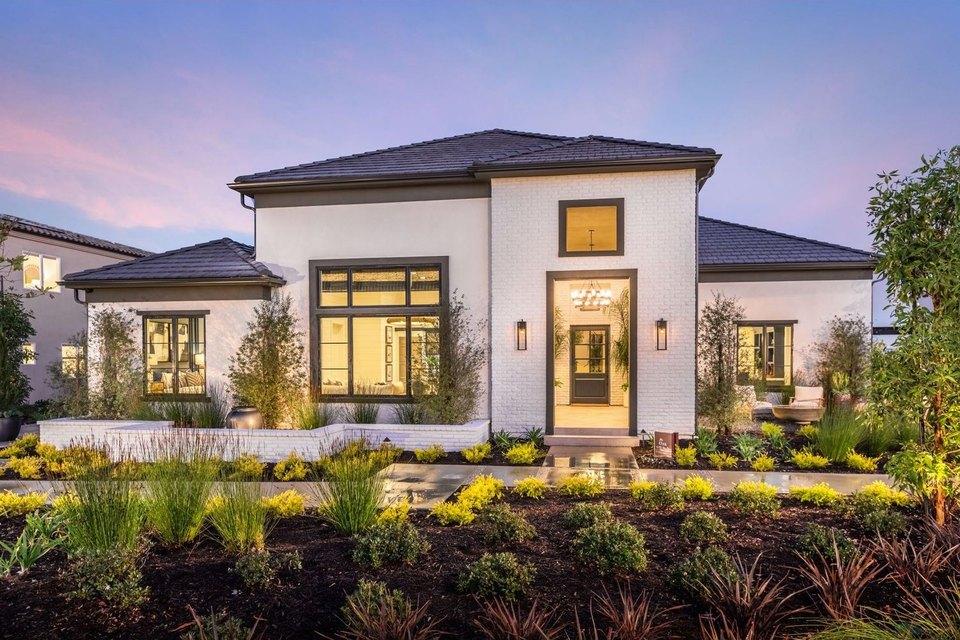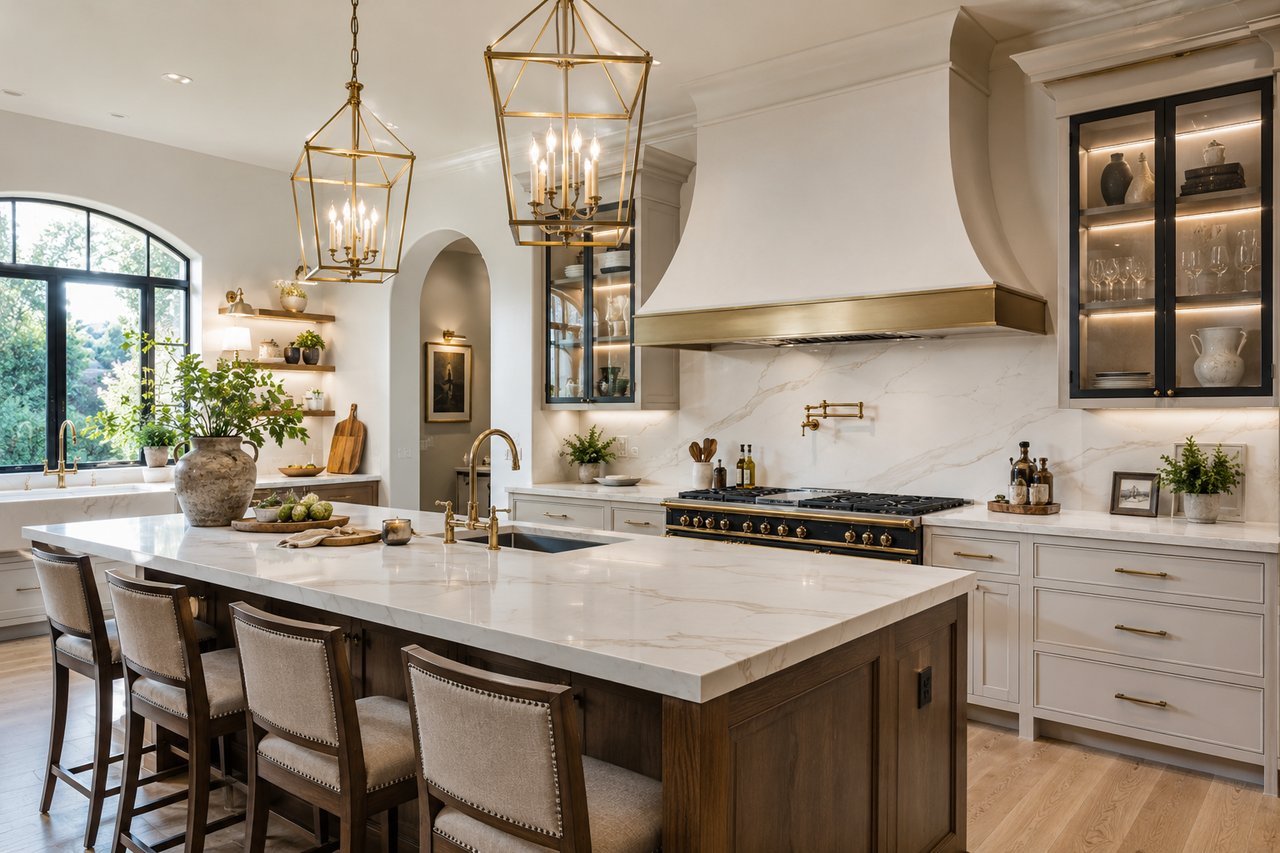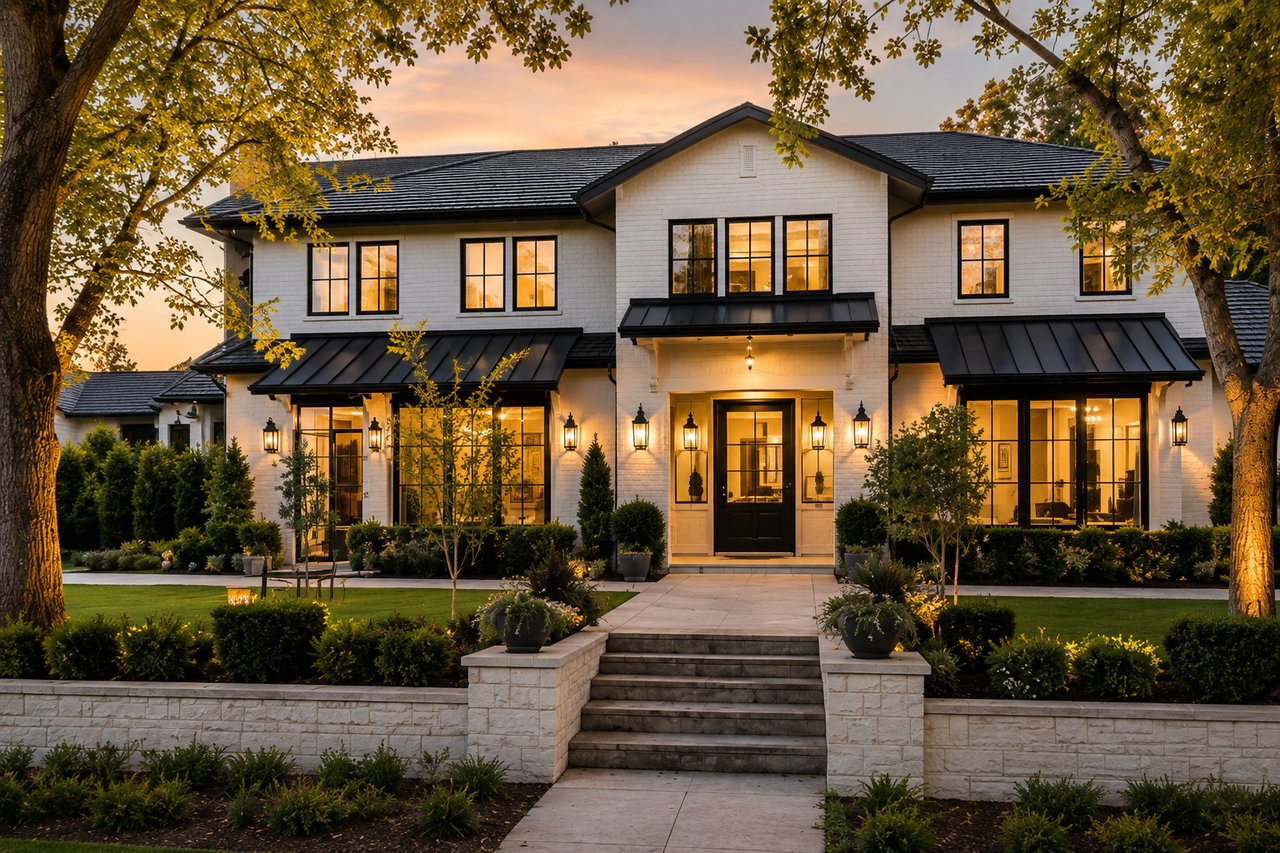
If you own a home in Alamo, you can get an estimated value online in seconds. Zillow, Redfin and other valuation sites will happily give you a number.
The harder question is: What would a buyer actually pay for your home today?
Those are not necessarily the same thing.
Online valuation algorithms can be useful as a starting point. They analyze public records and recent sales and use mathematical models to estimate value. But an algorithm doesn't walk through your house. It doesn't stand in your backyard. It doesn't know how your home feels compared with the other homes a buyer has seen that week.
And in Alamo, those differences can represent hundreds of thousands of dollars.
Alamo Homes Aren't Commodities
Two Alamo homes with similar square footage, bedroom counts and lot sizes can have dramatically different values.
Why?
One may sit on a quiet Westside court near the Iron Horse Trail while another has road noise. One may have a beautifully remodeled kitchen but an outdated primary bath. One may have a flat, usable backyard and pool; another may have acreage that is largely hillside.
There are views, privacy, school boundaries, architecture, natural light, ceiling height, floor plan, outdoor living, driveway approach and the relationship between the house and the lot.
Then there are factors that are surprisingly important to today's buyers: whether there is a bedroom and full bath on the main level, how the kitchen connects to the family room, how the indoor spaces flow to the outside, and how much work the house appears to need.
An automated valuation can't understand those distinctions.
I can.
I've spent more than two decades selling real estate in the Alamo market. I'm also an economist by training, so when I determine a home's likely selling price, I approach valuation from both directions: the data and the behavior of the market.
A Comparable Sale Is Only Comparable If Buyers Think It Is
This is one of the biggest weaknesses in automated home valuations.
Suppose a nearby 4,000sf home sold for $3.5 million. Your home is also approximately 4,000sf.
That doesn't make your house worth $3.5 million to your buyer.
Was it remodeled? By a designer?
Was the lot flat? Did it have a pool?
Was it on a court?
Did it have a downstairs suite?
Was the backyard private? Done by John Montgomery, Peter Konig, or randomly?
What was the architectural style? Is it currently in fashion?
Did buyers perceive it as turnkey?
Was there something about the location that buyers loved—or disliked?
And perhaps most importantly: what else was available when it sold?
Real estate values aren't created in a vacuum. Buyers compare the homes available to them and make tradeoffs. The competition at the moment you sell can influence your result far more than a comparable sale from six months ago.
The Market Can Change Faster Than the Algorithms
Alamo is a relatively small market, particularly when you narrow it to a specific price range, neighborhood or type of home.
That means recent sales data can be thin.
It also means the market can shift before that change becomes obvious in the closed-sale statistics.
I watch what happens before a sale closes.
Are new listings getting heavy traffic? Are disclosure packages being downloaded? Are buyers writing offers immediately or waiting? Are homes receiving multiple offers? Are price reductions becoming more common? What objections am I hearing repeatedly from buyers and agents?
Those are leading indicators.
Closed sales tell us what buyers agreed to pay weeks or months ago. Current buyer behavior helps tell us what they may be willing to pay now.
Your Remodel Matters — But Not Necessarily Dollar for Dollar
Homeowners frequently ask me whether a renovation has increased their home's value.
Usually, yes.
But not every dollar spent on a home produces a dollar—or more—at resale.
A beautifully remodeled kitchen may dramatically increase buyer enthusiasm. So can updated bathrooms, flooring, lighting, landscaping and an appealing outdoor entertaining area.
But buyers also make emotional judgments.
Sometimes a relatively inexpensive cosmetic improvement changes the perception of an entire house. Conversely, an expensive improvement that reflects a very specific personal taste may contribute considerably less than its cost.
That's why I don't simply enter “remodeled” into a valuation formula.
I look at what was done, how well it was done, how current it feels and how today's Alamo buyer is likely to respond to it.
Buyer Objections Have a Value, Too
This is an area automated valuations largely miss.
Every property has strengths. Most have objections.
Stairs. Road noise. A steep driveway. An unusual floor plan. Limited yard space. An older kitchen. A pool that occupies most of the backyard. A primary bedroom upstairs when buyers in that price range increasingly want one downstairs.
An objection doesn't mean a home won't sell.
It means we need to understand how much of the buyer pool it eliminates and whether the asking price appropriately compensates for it.
I pay close attention to these patterns because the same objections appear repeatedly in buyer feedback. Understanding them is part of accurately valuing a property—and part of knowing how to position it when it comes to market.
So, What Could Your Alamo Home Actually Sell For?
To answer that question, I look at much more than an automated estimate.
I consider recent comparable sales, current competition, pending sales and market momentum. Then I evaluate your home's location, lot, condition, improvements, floor plan, architecture, privacy, views, outdoor spaces and the features today's buyers are prioritizing.
I also consider something a computer has a particularly difficult time measuring:
How will buyers perceive your home when they walk through the door?
That ultimately matters because a home's market value isn't simply a calculation.
It's the price at which the market's perception of your home meets a buyer's willingness to pay.
Get an Alamo Home Value Analysis — Not an Automated Estimate
If you're considering selling your Alamo home—or you're simply curious about its value—I'm happy to prepare a personalized analysis.
This is not an automated valuation and no computer-generated report masquerading as an appraisal.
I will evaluate your home myself.
I'll look at the data, the current competition and the characteristics that make your property different. I'll also tell you where I think an online valuation is right, where I think it's wrong, and why. I’ll show you the most cost-effective updates that could have the buyers perceiving your home in the best light – and I have the people to do those improvements quickly, easily, and inexpensively.
Because Zillow doesn't know your remodel.
It doesn't know your lot, your views, your floor plan, your privacy or the objections a buyer may have.
I do.
What could your Alamo home sell for in today's market?
Contact Andrea Scott, The Agency, for a personalized Alamo home value analysis.